
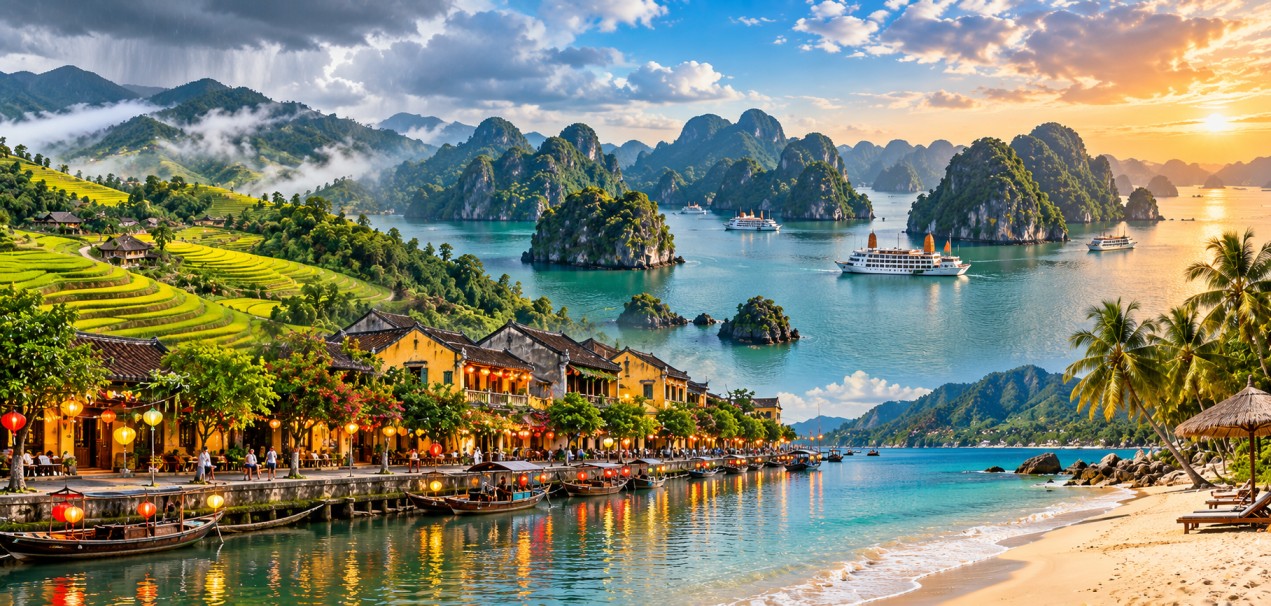
The best time to visit Vietnam is generally March to April, when weather conditions are favourable across much of the country. However, the ideal month depends on whether you’re exploring northern mountains, central beaches, or southern cities.
Vietnam spans several climate zones, so weather can vary significantly by destination. Hanoi may be cool, while Ho Chi Minh City enjoys warm sunshine.
This Vietnam weather guide explains seasonal conditions, month-by-month changes, and the best periods for sightseeing. It will help you plan your Vietnam vacation from the USA with greater confidence.
Understanding Vietnam’s Weather by Region
Vietnam has three main climate regions. Understanding these differences helps travelers select suitable destinations and travel dates.
Northern Vietnam: Hanoi, Sapa and Ha Long Bay
Northern Vietnam experiences distinct seasonal changes. Winters are generally cooler, while summers bring higher temperatures, humidity, and rainfall.
September to November offers pleasant conditions for Hanoi sightseeing and mountain excursions. March to May is another attractive period for exploring the region.
However, Sapa can become particularly cold between December and February. Travelers should pack warm clothing for mountain destinations.
Central Vietnam: Da Nang and Hoi An
Central Vietnam generally experiences warm, sunny conditions from February through August.
March to May is particularly suitable for exploring Da Nang, visiting the Golden Bridge, and discovering Hoi An’s historic streets.
However, September to November brings increased rainfall and tropical storm risks. Heavy rain can occasionally disrupt sightseeing and transportation.
Southern Vietnam: Ho Chi Minh City and the Mekong Delta
Southern Vietnam remains warm throughout the year, with distinct wet and dry seasons.
December to April generally provides drier conditions for sightseeing. Meanwhile, May to November brings more frequent rainfall.
Fortunately, southern rain often arrives in afternoon showers rather than continuing throughout the entire day.
Vietnam Weather Guide: January to December
Vietnam’s changing weather creates different travel experiences throughout the year. Here’s what travelers can generally expect each month.
January: Cool Northern Weather and Sunny Southern Days
January brings cool temperatures to Hanoi and Sapa. Meanwhile, Ho Chi Minh City experiences warm, relatively dry weather.
Central Vietnam may still receive occasional rainfall.
Best for: Southern sightseeing, cultural attractions, and exploring Ho Chi Minh City.
February: Comfortable Weather Across Many Destinations
February is an excellent month for exploring several regions of Vietnam.
Northern destinations remain cool, while Da Nang gradually becomes warmer. Southern Vietnam continues enjoying its dry season.
The Vietnamese Lunar New Year, known as Tet, can affect hotel availability and transportation.
Best for: Multi-city tours, cultural sightseeing, and southern Vietnam.
March: One of the Best Months to Explore Vietnam
March offers favourable weather across much of Vietnam.
Hanoi becomes warmer, central destinations enjoy sunshine, and southern cities remain relatively dry.
Travelers can comfortably combine cultural attractions, scenic landscapes, and coastal experiences.
Best for: First-time visitors, multi-destination vacations, and guided Vietnam tours.
April: Warm Weather and Excellent Sightseeing Opportunities
April brings warmer temperatures across the country.
Northern Vietnam remains suitable for sightseeing, while Da Nang and Hoi An enjoy favourable coastal conditions.
However, southern cities can become increasingly hot.
Best for: Ha Long Bay excursions, central Vietnam, and cultural tours.
May: Rising Temperatures and Seasonal Rainfall
May marks a transition toward wetter conditions in northern and southern Vietnam.
Central destinations generally remain sunny, although daytime temperatures can become uncomfortable.
Early morning sightseeing is particularly helpful during warmer periods.
Best for: Central Vietnam sightseeing and beach vacations.
June: Hot Summer Weather and Tropical Showers
June brings high humidity and frequent rainfall to northern Vietnam.
Southern destinations also experience their rainy season. However, central coastal areas often remain sunny.
Travelers should prepare for occasional weather-related changes.
Best for: Da Nang beaches and selected central Vietnam attractions.
July: Summer Heat Across Vietnam
July is among Vietnam’s hottest and most humid months.
Northern and southern regions experience regular rainfall. Meanwhile, central Vietnam can offer sunny beach weather.
Outdoor sightseeing is more comfortable during mornings and evenings.
Best for: Coastal vacations and travelers comfortable with tropical weather.
August: Rainy Conditions and Lush Landscapes
August brings continued rainfall to northern and southern Vietnam.
Mountain landscapes become beautifully green, although wet trails can affect outdoor activities.
Coastal storms may also disrupt boat excursions and transportation.
Best for: Flexible itineraries and travelers interested in green landscapes.
September: Pleasant Northern Weather Begins
September marks a gradual improvement in northern Vietnam’s weather.
Sapa’s rice terraces become particularly attractive around harvest season. Hanoi also starts experiencing cooler conditions.
However, central Vietnam enters a wetter period with increased storm risks.
Best for: Sapa, northern landscapes, and cultural sightseeing.
October: Excellent Weather in Northern Vietnam
October is one of the most pleasant months for exploring Hanoi and northern Vietnam.
Cooler temperatures make walking tours and outdoor sightseeing more enjoyable.
However, central Vietnam can experience heavy rainfall, flooding, and storms.
Best for: Hanoi, Sapa, and northern Vietnam excursions.
November: Cooler Northern Days and Improving Southern Weather
November brings comfortable conditions to many northern destinations.
Southern Vietnam gradually transitions into its drier season. However, central coastal areas may still experience significant rainfall.
Travelers visiting multiple regions should monitor local forecasts.
Best for: Hanoi sightseeing and southern city experiences.
December: Dry Southern Weather and Cool Northern Landscapes
December offers excellent conditions for exploring Ho Chi Minh City and southern Vietnam.
Northern destinations become cooler, particularly in Sapa. Meanwhile, central Vietnam may still experience unsettled weather.
The holiday season can also increase demand for popular tours.
Best for: Southern Vietnam, cultural vacations, and year-end travel.
Best Time to Visit Vietnam for Popular Destinations
The best month depends on your preferred destinations and activities.
| Destination | Recommended Months | Ideal Experiences |
| Hanoi | September–November, April–May | Historic attractions and walking tours |
| Sapa | March–May, September–November | Mountain scenery and rice terraces |
| Ha Long Bay | April–June, September–November | Scenic cruises and limestone landscapes |
| Da Nang | February–May | Sightseeing and coastal experiences |
| Hoi An | February–April | Ancient Town and cultural exploration |
| Ho Chi Minh City | December–April | Museums, markets, and city sightseeing |
| Mekong Delta | December–April | River excursions and countryside experiences |
These periods are general recommendations. Actual weather conditions can vary each year.
Best Time to Visit Vietnam for Sightseeing, Cruises and Outdoor Activities
For cultural sightseeing across several regions, March and April offer a favourable balance of temperatures and rainfall.
Travelers planning a Ha Long Bay cruise should consider April to June or September to November. However, cruise schedules always depend on weather and safety conditions.
For Sapa’s mountain scenery, September and October offer attractive rice terraces. March to May provides another suitable window for outdoor exploration.
Beach lovers may prefer central Vietnam between February and May, before intense summer heat arrives.
When Is the Cheapest Time to Visit Vietnam?
Vietnam can be more affordable during periods of lower tourist demand. However, the cheapest months vary by destination.
Rainy-season travel may offer better hotel availability and occasional discounts. Nevertheless, weather disruptions can affect planned activities.
Popular holiday periods, including Tet and Christmas, may increase accommodation and transportation costs.
For travelers from the USA, international airfare also influences the total vacation budget.
Therefore, compare complete travel costs rather than choosing dates based on hotel prices alone.
How Does Vietnam’s Weather Affect Travel Planning?
Vietnam’s regional weather differences make itinerary planning especially important.
For example, travelers visiting Hanoi, Da Nang, and Ho Chi Minh City may experience three different weather patterns during one vacation.
Pack lightweight clothing for warm destinations and additional layers for northern mountain areas.
During rainy periods, allow flexibility for sightseeing and transportation. Check weather forecasts before cruises, mountain excursions, and coastal activities.
Plan Your Vietnam Vacation with Global Holidays USA
Planning a multi-city Vietnam vacation becomes easier when transportation, accommodation, and sightseeing arrangements are organised in advance.
Global Holidays USA offers an 11-day Vietnam Sojourn Tour Package from the USA, covering Ho Chi Minh City, Da Nang, Hanoi, Sapa, and Ha Long Bay.
The guided itinerary includes cultural sightseeing, scenic experiences, selected domestic transportation, and Indian vegetarian meals prepared by an Indian chef.
Explore the Vietnam Sojourn Tour Package to review available departure dates, inclusions, and booking details.
Conclusion
The best time to visit Vietnam is March to April for a multi-region vacation, although the ideal season varies by destination. Northern Vietnam is especially attractive during autumn, central Vietnam offers pleasant spring weather, and southern Vietnam enjoys drier conditions from December to April.
Understanding these regional differences helps travelers choose suitable dates and avoid unnecessary weather-related disruptions.
Ready to explore Vietnam? Discover the Vietnam tour packages from USA offered by Global Holidays USA and start planning your next adventure.
Frequently Asked Questions About Vietnam Weather
What is the best month to visit Vietnam?
March is one of the best months to visit Vietnam because weather conditions are generally favourable across multiple regions.
When is the rainy season in Vietnam?
Northern and southern Vietnam generally experience more rainfall between May and October or November. Central Vietnam’s wettest period often occurs later.
Is December a good time to visit Vietnam?
Yes. December is particularly suitable for southern Vietnam. However, northern destinations can be cold, and central areas may receive rain.
Is February a good month to visit Vietnam?
Yes. February offers relatively dry southern weather and improving conditions in central Vietnam. Northern destinations remain cooler.
What is the best time to visit Vietnam from the USA?
March and April are excellent choices for multi-region vacations. However, your ideal departure depends on your preferred destinations and activities.
 Axar Tours Global Holidays LLC.