
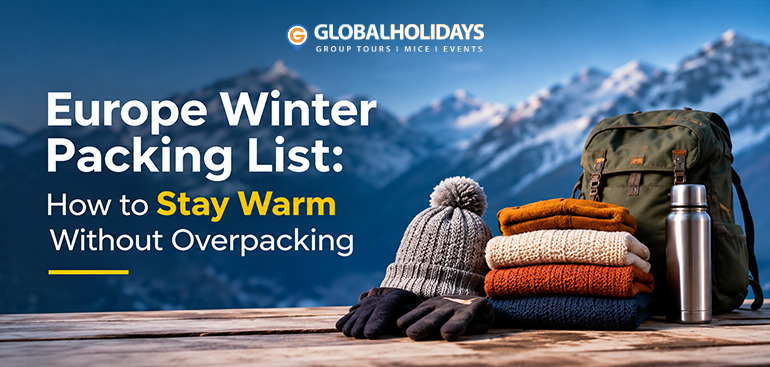
Picture yourself strolling around Europe and admiring snowy rooftops, warm cafés and festive markets. Winter in Europe runs from December to February, the cold is manageable, but the suitcase is the real problem.
Although a European winter break can be very special, it can be quite difficult to pack for fluctuating temperatures, extensive shopping hours and cold nights. So, what should you pack? How should you combine clothing items and what is best to avoid?
Below is a guide to efficiently pack for a European winter so that you can fully enjoy your holiday without having carry around your entire wardrobe.
How to pack for Winter in Europe
The key to packing the right clothing is ensuring you have the right layers. Whilst you don’t want to overload your suitcase with heavy jumpers, you’ll want to ensure your clothing will work well together.
This will depend on where you’re going, what the weather is like and what you’ll be doing on your trip. If you’re going to a Christmas market, you’ll need different clothing than if you’re going for skiing or exploring Northern Finland.
How Cold Is Europe in Winter?
While most southern European cities, for example, are fairly temperate, European locations such as Zurich, Vienna and Prague can be much colder. In addition, there is the possibility of frost and even snow.
If you are travelling to a number of different countries, then you could well move between cooler and much colder conditions throughout your holiday.
Being aware of average temperatures at your holiday destination will ensure that you can dress appropriately and avoid over-packing.
Temperatures vary by city; these are typical December-January averages:
| City | High / Low (°C) | High / Low (°F) |
| Rome | 12 / 3 | 54 / 37 |
| Paris | 8 / 3 | 46 / 37 |
| Zurich | 4 / -1 | 39 / 30 |
| Vienna | 3 / -2 | 37 / 28 |
| Prague | 3 / -1 | 37 / 30 |
Alpine resorts run colder and receive heavy snowfall. Wind and damp also make cities feel colder than these numbers. Check the forecast one week before departure.
Asking yourself these three questions
It will help you determine what to pack:
Where are you going?
What are you doing?
How much luggage can you take?
Check how much luggage you’re allowed to take with your airline.
This list is designed with city breaks in mind. It won’t give you all the equipment you’ll need for skiing or extreme cold conditions but using the same layers, you can tailor your clothing to suit your holiday.
Europe Winter Packing List
A winter trip to Europe calls for a little extra planning, especially when your itinerary includes several cities with different weather conditions, so it is important to pack suitable clothing and footwear.
Alongside these, there are also key items and useful add-ons that should be taken, start with this list to know what to pack for your winter city break:
Clothing
- 3 Thermal Undershirts
- 2 Thermal Tights
- 3 Thin long-sleeved tops or jumpers.
- 1 Optional nicer jumper or jumper dress. Useful for an evening meal.
- 2 Bottoms. Either 2 pairs of trousers, a pair of jeans and a skirt.
- 1 Compact warmer. Either a puffy down jacket or a jumper.
- 1 Warm waterproof coat. Ideally with a hood and zipped inner pockets.
- 1 pair of warm walking boots. Ensure they have good grip, are comfortable and waterproof.
- 7 Undergarments
- 7 Socks. Consider how many you’ll need to wash and how much you’re willing to wear.
- 1-2 Pairs of thicker wool socks, for colder conditions.
- 1 Pajamas. As long as they are comfortable, they can double up as your gym wear for your hotel.
Accessories, Toiletries & Tech
- Warm beanie
- Matching scarf
- Gloves / Mittens. Ideally touchscreen friendly.
- Sunglasses
- Daypack with extra zip pocket.
- Thin wallet / wristlet.
- Toiletries. Split into liquid & non-liquid.
- Toothbrush & Charger
- Phone, Cables & Power Bank
- Camera / Laptop (If required)
- Avoid a One Size Fits All Approach
There’s no one piece of clothing that will work for all destinations in Europe. Check what the weather is like at each location.
How to Stay Warm Without Bulk
A good way to stay warm in the winter is to have three layers. A base layer to wick sweat away, a middle layer to keep you warm and an outer layer to protect you from the elements.
Light Base Layers
These go under your normal clothing, so try to get lightweight ones. This way you can easily wear a jumper or coat over them.
Merino wool is a great option to keep your luggage light. It’s breathable, wicks sweat away and doesn’t smell. This may help you wear them more than once, but they are usually more expensive.
Start with 2 tops for a week. If you’re using fabric that requires changing more often than 3 may be a good option. Anti-smell is a bonus but don’t rely on them staying fresh throughout your whole trip.
Thermal Tights
These are a great way to keep your legs warm without taking up too much room in your luggage. Having 2 pairs means you can swap them.
They can make skirts or dresses more practical for your winter sightseeing. Just make sure you have something to keep you warm underneath.
Compact Warmer
A compact down or jumper will keep you warm. A jumper is great as it won’t take up too much space in your carry-on bag.
Down is a great material to keep your luggage light. It will give you lots of warmth for the weight and can be compressed down. Try an ultra-light down jumper such as Uniqlo.
Think of this as an extra layer. If you have an average city break it can be an extra layer to take out when needed. If you are going somewhere much colder than you need to be more considerate with your warmer.
Coat & Boots
These will be worn throughout your winter trip so it’s better to get these right than having multiple extra jumpers.
If you’re only taking one coat, then make sure it has the following:
Waterproof & Windproof: Ensure its suitable for the weather. If there’s a chance of rain or snow then make sure to get something that will protect you from the elements.
Hood: This will make it easier to keep you protected from the elements without having an open umbrella, full length down to your hips.
Zipped inner pockets: Useful for keeping your smaller valuables less exposed.
Neutral color, so it can easily match with your small wardrobe.
Make sure you get something you can wear with all your outfits. As this will be the most noticeable piece of clothing you’ll be wearing throughout your trip.
Boots
You want to prioritize getting warm boots that have good grip. You don’t necessarily need heavy duty snow boots for your city break.
As Europe has cobblestones it’s important to have boots that will help you with walking. Choose something that will support the amount of walking you’ll be doing.
Depending on your itinerary choose how heavy duty your boots need to be, wear them whilst travelling so they don’t go in your luggage.
Create A Small Winter Capsule Wardrobe
A capsule wardrobe is a small amount of clothing that can all be mixed and matched. 3 tops and 2 bottoms will give you enough variety for a week.
Ensure all your tops can be mixed with all your bottoms.
Lay your clothes out to see what can be mixed. If you have a top that can only go with one skirt, then it’s not as flexible. If you have a jumper that can go with both your bottoms, then it’s more flexible.
Plan your winter Trip to Europe with Global Holidays USA
When you take a guided tour to Europe, we plan your hotels, transport, and sightseeing, so you have less to pack.
We offer tours to Europe from the USA, with an Indian Kitchen Caravan on your adventure and enjoy the delicious ghar jaisa khana.
Get in touch with our team to find out departure dates for your winter break, how much luggage you can take and what meals are included.
As it can be colder in winter, make sure you check your travel insurance.
Conclusion
To create the best winter packing list for Europe, you will want to pack some thermal clothing, a mid-layer such as a fleece or down, a waterproof outer layer, warm accessories and waterproof footwear.
Ensure that your layers match up to the forecast. Use packing cubes and wear your warmest clothing whilst on the plane. Make sure your airport essentials are easy to access.
Also Read: Europe Tours with Indian Chef: Benefits, Meals & Travel Experience
Frequently Asked Questions
What should I wear in Europe in winter?
Thermal base layers, mid layers such as a fleece or down and a waterproof/windproof jacket. Don’t forget a hat, gloves, scarf and waterproof footwear.
How many days should I pack for?
You should pack for 5-6 days. Even if your holiday is longer, you can wash your clothes once or wear your sweaters and trousers more than once.
Can I take my power bank in my hold luggage?
No. You must keep your power banks and electronics in your hand luggage.
Is it warm enough in Rome to not pack thermals?
The average temperature in January in Rome can be around 12°C (54°F) but it can get quite chilly at night with temperatures around 3°C (37°F). Pack one thermal layer for the evenings.
 Axar Tours Global Holidays LLC.