
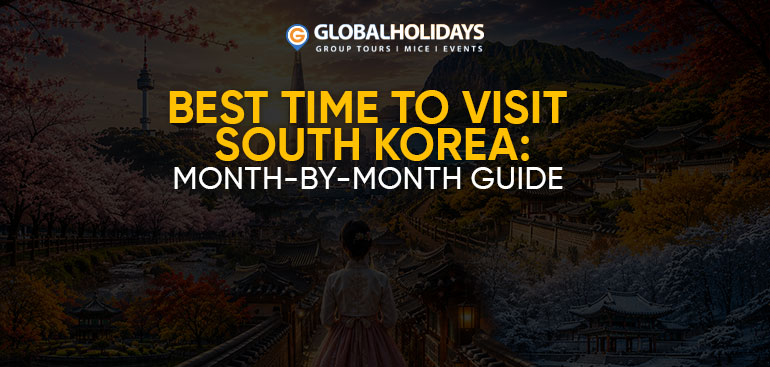
Planning a trip to Seoul, Busan, or Jeju Island? Knowing the best time to visit South Korea can completely change your experience. The right season brings cherry blossoms, golden foliage, or festive city lights, while the wrong one can mean heavy rain or biting cold.
This guide breaks South Korea’s seasons down month by month. You will learn when to expect cherry blossoms, when crowds peak, and which months balance good weather with lower travel costs. Therefore, by the end, you will know exactly when to book your 2026 trip.
Best Time to Visit South Korea: Quick Overview
In short, spring and autumn offer the most comfortable weather for sightseeing. Spring runs from March to May, while autumn spans September to November.
Summer brings heat, humidity, and lively festivals. Winter offers snow, ski resorts, and fewer crowds, but temperatures drop well below freezing in many regions.
If you want one simple answer to “when is the best time to visit South Korea,” choose April or October. Both months combine pleasant temperatures with manageable crowds.
South Korea Weather and Seasons Explained
South Korea experiences four distinct seasons. Each one transforms the country’s cities, palaces, and landscapes in a different way.
Understanding these seasonal patterns helps you match your trip to your travel priorities. Here is a closer look at what each season offers.
Spring (March to May): Cherry Blossoms and Mild Weather
Spring is one of the most popular seasons to visit South Korea. Cherry blossoms typically bloom from late March through mid-April, depending on the region.
Temperatures during spring range from the low 50s in March to the high 60s by May. However, this season also brings occasional “yellow dust” days, when fine particles from nearby deserts affect air quality.
Popular spring destinations include Gyeongbokgung Palace in Seoul and Jinhae’s cherry blossom festival on the southern coast. Hotels and flights book up quickly during peak bloom, so early planning matters.
Summer (June to August): Heat, Humidity, and Festivals
Summer in South Korea is hot, humid, and occasionally rainy. The monsoon season, known locally as jangma, typically arrives in late June and continues into July.
Temperatures often climb into the 80s and low 90s during July and August. Despite the heat, this season offers vibrant beach trips to Busan and Jeju Island, along with lively night markets in Seoul.
Travelers who enjoy festivals and coastal escapes may still find summer rewarding. However, packing light, breathable clothing and planning indoor activities during peak heat hours helps make the season more comfortable.
Autumn (September to November): Cool Air and Fall Foliage
Many travelers consider autumn the best time to visit South Korea overall. Skies turn clear, humidity drops, and temperatures settle into a comfortable range between the high 50s and low 70s.
Fall foliage peaks from mid-October to early November, especially in mountainous regions like Seoraksan National Park. Therefore, October consistently ranks as one of the most popular months for visiting Korea.
This season also suits multi-city itineraries well. Trains between Seoul, Busan, and Gyeongju run efficiently, and pleasant weather makes longer travel days more enjoyable.
Winter (December to February): Snow, Skiing, and Quiet Cities
Winter brings cold, dry air and frequent snowfall, especially in northern and mountainous areas. January is typically the coldest month, with temperatures often dropping below freezing.
This season suits travelers interested in skiing, snow festivals, and quieter sightseeing. Resorts near Pyeongchang and Gangwon-do attract winter sports enthusiasts from across Asia.
Although winter is South Korea’s least crowded season, palaces and city streets take on a peaceful, snow-dusted charm. Travelers willing to bundle up often enjoy lower hotel prices and shorter lines at major attractions.
Best Time to Visit South Korea Month by Month
A month-by-month breakdown helps you fine-tune your travel dates. Here is what to expect throughout the year.
March starts cold but warms steadily, with early cherry blossoms appearing in southern regions. April remains the most popular month, since peak bloom typically occurs across most of the country.
May offers warmer days with fewer crowds than April, though rainfall begins to increase toward month’s end. June stays relatively comfortable before the rainy season intensifies in late June and July.
July and August are South Korea’s hottest, most humid months, ideal for coastal trips but less comfortable for city walking. September cools down quickly and marks the unofficial start of autumn’s best weather.
October is widely regarded as the single best month to visit, thanks to fall foliage and mild temperatures. November stays pleasant early on but turns noticeably colder by month’s end.
December through February bring winter’s coldest temperatures, along with snow festivals and ski season. January, in particular, is the coldest month, though it also offers the lowest prices and thinnest crowds.
Best Time to Visit South Korea for Cherry Blossoms
Cherry blossom season remains one of the top reasons travelers choose spring. Peak bloom generally occurs between late March and early April, though exact timing shifts slightly each year.
Seoul typically sees blossoms bloom in early April, while southern cities like Jinhae bloom slightly earlier. Therefore, checking annual bloom forecasts before booking flights is a smart strategy.
Popular cherry blossom spots include Yeouido Park in Seoul and the Jinhae Gunhangje Festival near Busan. Booking accommodations several months in advance is essential during this period.
Best Time to Visit South Korea for Fall Foliage
Autumn foliage offers a strong alternative to spring’s cherry blossoms. Peak color typically appears from mid-October through early November, depending on elevation and region.
Mountainous areas like Seoraksan and Naejangsan National Park transform into vivid displays of red, orange, and gold. Meanwhile, city parks and palace grounds in Seoul also turn impressively colorful.
Compared to spring, autumn generally brings fewer crowds and more predictable weather. This makes it an excellent choice for travelers who prioritize comfortable sightseeing over peak bloom.
Best Time to Visit South Korea for Festivals
Several cultural festivals shape South Korea’s travel calendar. The Chuseok harvest festival, similar to Thanksgiving, falls in late September or early October and brings families together nationwide.
Winter festivals, including ice fishing events in Gangwon-do, attract visitors despite the cold. Seollal, the Lunar New Year, typically falls in January or February and temporarily closes many shops and restaurants.
Travelers attending major festivals should book early. Domestic travel surges during these periods, which affects both transportation and hotel availability.
Best Time to Visit South Korea on a Budget
Winter generally offers the lowest prices for flights and hotels. December through February sees fewer tourists, except around ski resorts and New Year celebrations.
June is also an underrated budget-friendly month. The weather stays warm without the peak heat of July and August, and crowds remain noticeably thinner than during cherry blossom season.
Avoiding major holidays like Seollal and Chuseok helps reduce costs further. Therefore, travelers focused on value should target early June or mid-winter for the best combination of weather and pricing.
South Korea Tour Packages: Planning Your Trip Around the Seasons
Choosing the right season becomes easier with a structured itinerary. Global Holidays USA’s Japan and South Korea tour package combines both destinations into one seamless 12-day journey.
This package includes Seoul highlights like the Han River Cruise, the DMZ, Nami Island, and N Seoul Tower. Departures are scheduled in March, April, and May, aligning perfectly with cherry blossom season.
Since accommodation, ground transportation, and entrance fees are all included, travelers avoid the stress of planning around seasonal weather independently. A knowledgeable tour manager also helps navigate festival crowds and seasonal closures.
Tips for Choosing the Best Time to Visit South Korea in 2026
Start by deciding what matters most to your trip. Cherry blossoms, fall foliage, festivals, and budget travel each point toward a different season.
Booking flights and hotels three to four months in advance is especially important during spring and autumn. However, last-minute winter trips often remain easier to plan, since demand stays lower.
Packing layered clothing helps regardless of season, since temperatures can shift quickly between morning and evening. Also, checking South Korea’s K-ETA travel authorization requirements ahead of time prevents delays at departure.
Conclusion
There is no single answer to the best time to visit South Korea, since each season offers something different. Spring delivers cherry blossoms, autumn brings comfortable weather and stunning foliage, and winter rewards travelers seeking snow and quieter cities.
For most first-time visitors, April and October remain the strongest choices overall. However, summer festivals and winter ski trips offer rewarding alternatives for travelers with different priorities.
Ready to experience Seoul, Busan, or Jeju Island at the perfect time of year? Explore Global Holidays USA’s Japan and South Korea tour package and start planning your 2026 trip today.
 Axar Tours Global Holidays LLC.