
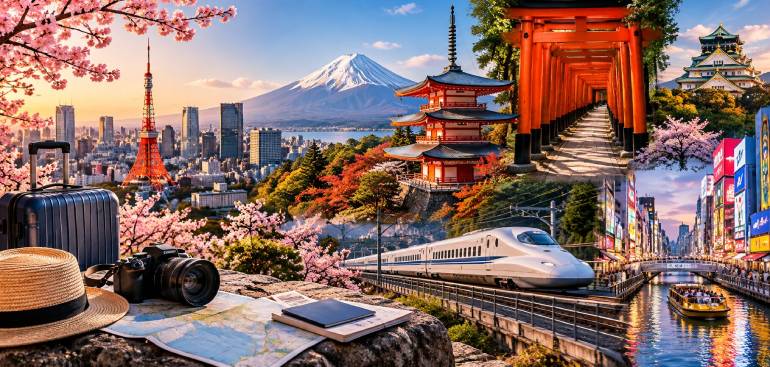
A Japan Travel Itinerary should balance famous cities, cultural experiences, food, nature, and travel time. For first-time visitors, 7 days works for major highlights, 10 days adds more variety, and 14 days allows a deeper journey. Japan National Tourism Organization also recommends focusing on fewer destinations for shorter trips. It suggests the Tokyo, Kyoto, and Osaka route for trips of around 10 days to two weeks.
Japan offers a unique mix of modern cities and traditional culture. You can see futuristic Tokyo, historic Kyoto, and energetic Osaka on one trip.
You can also experience Mount Fuji, peaceful gardens, ancient temples, Japanese cuisine, and high-speed trains.
For travelers planning Japan Travel from USA, choosing the right route is important. Japan is geographically long, so unnecessary travel can reduce sightseeing time.
This guide provides practical 7, 10, and 14-day Japan itineraries. You can also adjust each plan around your interests, travel season, and flight schedule.
Why Choose a Japan Travel Itinerary for Your First Trip?
Japan offers countless places to visit. Therefore, first-time visitors can easily try to fit too much into one trip.
A planned itinerary helps you focus on destinations that work well together. It also reduces unnecessary hotel changes and long transfers.
Tokyo, Kyoto, and Osaka form a popular first-trip route. These cities offer different sides of Japanese culture.
Tokyo combines modern architecture, shopping, temples, food, and entertainment. Kyoto offers traditional neighborhoods, shrines, temples, gardens, and cultural experiences.
Osaka adds a relaxed city atmosphere with famous food and lively neighborhoods. You can also use Osaka as a base for nearby destinations.
The official tourism organization recommends a single base for very short trips. For longer trips, it recommends routes that connect Tokyo, Kyoto, and Osaka.
Your ideal Japan Tour also depends on your interests.
Food lovers may spend more time in Osaka and Tokyo. History lovers may add Hiroshima and Nara.
Nature lovers can include Hakone, Mount Fuji, or other regional destinations. Therefore, the best itinerary is not always the longest one.
How Many Days Do You Need for Japan?
Seven days is enough for a first introduction to Japan. However, you need to keep the route focused.
Ten days provides more flexibility. You can add Hakone, Nara, or another destination without making every day too busy.
Fourteen days gives you more time for cultural experiences and regional travel. You can include Hiroshima and Miyajima while still enjoying Tokyo, Kyoto, and Osaka.
The right trip length also depends on your international flight schedule. Travelers from the USA should consider arrival and departure time carefully.
A long flight can make the first day tiring. Therefore, avoid planning major attractions immediately after arrival.
For many first-time travelers, 10 days provides a practical balance. You can experience the classic route without rushing through every destination.
Japan Travel Itinerary: 7-Day Plan
A 7-day Japan Travel Itinerary works best when you focus on Tokyo, Kyoto, and Osaka. This route provides a strong introduction to modern Japan, traditional culture, and Japanese food.
Days 1–3: Tokyo
Start your Japan tour in Tokyo.
Use your first day to explore a nearby neighborhood after checking into your hotel. This approach helps you recover from the long flight.
Visit Asakusa and explore Senso-ji Temple. Then walk around Nakamise Shopping Street.
On another day, explore Shibuya and Harajuku. Shibuya Crossing offers one of Tokyo’s most recognizable city experiences.
You can also visit Meiji Jingu and explore nearby shopping areas.
Keep one day flexible for Tokyo’s museums, gardens, markets, or neighborhoods. Popular choices include Shinjuku, Ginza, Ueno, and Akihabara.
Tokyo is large, so avoid crossing the city repeatedly in one day. Group nearby attractions together.
Days 4–5: Kyoto
Take the Shinkansen from Tokyo to Kyoto. The journey takes around two and a half hours on the Tokaido Shinkansen route.
Spend your first Kyoto day exploring Fushimi Inari Shrine. Continue toward Kiyomizu-dera and the historic Higashiyama area.
Walk through Ninenzaka and Sannenzaka. These streets provide a strong introduction to Kyoto’s traditional atmosphere.
On your second day, explore Arashiyama and its famous bamboo grove. You can also visit nearby temples and gardens.
Start early at popular attractions. This allows more comfortable sightseeing during busy periods.
Days 6–7: Osaka
Travel from Kyoto to Osaka. The journey is short, so you can begin sightseeing after checking in.
Visit Osaka Castle and explore the surrounding area.
In the evening, head toward Dotonbori. Try local specialties such as takoyaki and okonomiyaki.
Use your final day for shopping and additional Osaka attractions.
This 7-day route works well for travelers who want a classic first experience. It also keeps the number of hotel changes manageable.
Japan Travel Itinerary: 10-Day Plan
A 10-day Japan Travel Itinerary gives you enough time to slow down slightly. You can add Hakone and Nara to the classic Tokyo, Kyoto, and Osaka route.
Days 1–3: Tokyo
Follow the same three-day Tokyo plan.
Explore Asakusa, Shibuya, Harajuku, Meiji Jingu, Shinjuku, and another neighborhood based on your interests.
Keep some evening time free for Japanese food experiences.
Tokyo has an enormous dining scene. You can explore ramen shops, sushi restaurants, izakayas, department-store food halls, and local cafés.
Day 4: Hakone and Mount Fuji
Travel from Tokyo toward Hakone.
Hakone is popular for mountain scenery, hot springs, Lake Ashi, and views of Mount Fuji. The official Japan tourism itinerary also includes Hakone as an easy addition to the Golden Route.
Take a scenic boat ride on Lake Ashi if conditions allow. You can also visit Hakone Shrine.
Consider staying overnight in a traditional ryokan. An onsen experience can add a memorable cultural element to your Japan trip.
Mount Fuji visibility depends heavily on weather. Therefore, avoid building your entire day around a guaranteed view.
Days 5–6: Kyoto
Travel from Hakone toward Kyoto.
Spend two days exploring Kyoto’s major cultural attractions.
Visit Fushimi Inari, Kiyomizu-dera, Higashiyama, and Arashiyama.
You can also include a tea ceremony or traditional Japanese dining experience.
Day 7: Nara
Take a day trip from Kyoto to Nara.
Visit Nara Park and explore its historic temples. Todai-ji is one of the area’s major attractions.
Nara works well as a day trip because you do not need to change hotels.
Return to Kyoto in the evening or continue toward Osaka, depending on your hotel plan.
Days 8–10: Osaka
Move to Osaka and spend the final three days exploring the city.
Visit Osaka Castle and explore Dotonbori.
You can also use Osaka for shopping and food experiences. Osaka is known for its food culture and lively nightlife.
Keep the final day lighter if you have an international departure soon.
A 10-day Japan tour provides a strong balance of cities, culture, food, and nature.
Japan Travel Itinerary: 14-Day Plan
A 14-day Japan Travel Itinerary gives first-time visitors more breathing room. You can include Tokyo, Hakone, Kyoto, Nara, Hiroshima, Miyajima, and Osaka.
This route closely follows the classic Golden Route while allowing additional time for cultural experiences. The official two-week route also connects Tokyo, Hakone, Kyoto, Nara, Hiroshima, and Osaka.
Days 1–3: Tokyo
Spend three days exploring Tokyo.
Visit Asakusa, Senso-ji, Shibuya, Meiji Jingu, Harajuku, Shinjuku, and another neighborhood.
Use one evening for a Japanese food experience.
You can also reserve time for shopping or a museum. Avoid filling every hour with attractions.
Day 4: Hakone
Travel to Hakone and explore the area’s natural scenery.
Visit Lake Ashi and Hakone Shrine. Consider a ropeway ride if operating conditions are suitable.
Stay at a ryokan if your budget allows.
A traditional stay can provide a different experience from a modern Tokyo hotel.
Days 5–7: Kyoto
Spend three days in Kyoto.
Visit Fushimi Inari, Kiyomizu-dera, Higashiyama, Arashiyama, and other temples or gardens.
Use the third day for a slower cultural experience.
You could join a tea ceremony, explore a traditional neighborhood, or take a food tour.
Three days also gives you more flexibility when weather affects outdoor plans.
Day 8: Nara
Take a day trip to Nara.
Explore Nara Park and Todai-ji. You can also walk through the historic Naramachi area.
Return to Kyoto or continue toward Hiroshima based on your preferred hotel arrangement.
Days 9–10: Hiroshima and Miyajima
Travel to Hiroshima by Shinkansen.
Visit the Hiroshima Peace Memorial Park and related historical sites.
Then explore Miyajima and Itsukushima Shrine.
Miyajima adds a scenic coastal experience to your Japan tour.
Allow enough time for transportation between Hiroshima and Miyajima.
Days 11–13: Osaka
Travel to Osaka and spend three days exploring the city.
Visit Osaka Castle and explore Dotonbori.
You can also visit Umeda, Shinsekai, and local shopping streets.
Consider a day trip if you want more variety. However, keeping one flexible day in Osaka can make the final part of your trip easier.
Day 14: Departure
Keep your final day simple.
Travel to your departure airport with enough time for check-in and security.
If you fly from Kansai International Airport, staying in Osaka the previous night can simplify your departure.
For open-jaw flights, you can also arrive in Tokyo and depart from Osaka. This approach can reduce unnecessary backtracking.
What Are the Best Places to Include in a Japan Tour?
Tokyo is an excellent starting point for first-time visitors. It combines modern city life with traditional neighborhoods.
Kyoto is ideal for travelers interested in temples, gardens, traditional architecture, and Japanese culture.
Osaka is especially appealing to travelers interested in food, shopping, and nightlife.
Hakone adds nature and hot spring experiences. It also provides opportunities for Mount Fuji views.
Nara adds history and traditional attractions without requiring another long-distance move.
Hiroshima provides important historical experiences. Miyajima adds temples, coastal scenery, and a different atmosphere.
You do not need to visit every destination on your first Japan trip. A shorter itinerary can feel more enjoyable when you spend enough time in each place.
How to Travel Around Japan on Your Itinerary
Japan has an extensive public transportation network. Trains are especially useful for connecting major destinations.
The Shinkansen connects major cities quickly. It is useful for routes such as Tokyo to Kyoto and Osaka to Hiroshima.
IC cards can make local transportation easier. Cards such as Suica and PASMO can be used across many trains, buses, vending machines, and participating stores.
Do not automatically assume a nationwide rail pass is the cheapest option. Compare your actual route before purchasing one.
Your transportation needs depend on the itinerary you choose.
For example, a 7-day Tokyo, Kyoto, and Osaka trip may require fewer long-distance journeys. A 14-day itinerary with Hiroshima requires more intercity travel.
Large luggage also deserves attention.
Some Shinkansen routes have specific rules for oversized baggage. Baggage exceeding 160 centimeters in total dimensions may require a designated seat reservation.
Japan also offers luggage storage and delivery services. These options can make city-to-city travel easier.
Japan Travel From USA: What First-Time Visitors Should Know
Travelers planning Japan Travel from USA should prepare for a long international journey.
Book your flights around your itinerary. Tokyo has two major international airports, Haneda and Narita. Osaka is served internationally by Kansai International Airport.
Consider arriving in Tokyo and departing from Osaka. This can create a more efficient route.
U.S. citizens can generally visit Japan without a tourist visa for stays of up to 90 days. Japan’s entry rules require a valid passport for the entire stay and proof of onward or return travel. Always check current requirements before departure.
Visit Japan Web can also help travelers complete arrival procedures before reaching Japan.
Money and Payments in Japan
Credit cards are widely accepted in Japan. However, travelers should still carry some Japanese yen.
Japan’s tourism authority recommends keeping cash available because some locations may not accept cards.
An IC card can also make small purchases easier.
Connectivity During Your Japan Trip
A reliable internet connection makes navigation easier.
Consider an eSIM or travel SIM before departure. Download important maps and travel information before leaving your hotel.
Google Maps can also help with train routes, walking directions, and station information.
Best Time to Follow a Japan Travel Itinerary
Japan offers different experiences throughout the year.
Spring is popular for cherry blossoms. However, peak periods can bring higher demand and crowded attractions.
Autumn offers colorful foliage and comfortable sightseeing weather in many regions.
Summer brings festivals and longer daylight hours. However, some areas can be hot and humid.
Winter offers snow experiences and hot springs. Northern Japan can experience heavy snowfall and freezing temperatures.
Japan’s climate varies considerably from north to south. Therefore, your packing list should match your destinations and travel season.
If you want comfortable sightseeing, consider the shoulder seasons. However, your ideal travel period depends on the experiences you want.
How to Make Your Japan Itinerary More Comfortable
Avoid changing hotels every night.
Each hotel change takes time. You need to pack, check out, travel, and check in again.
Instead, use cities such as Tokyo, Kyoto, and Osaka as bases.
Plan attractions by neighborhood. This reduces unnecessary time on trains and subways.
Start early for major attractions. Popular locations can become busy later in the day.
Also, leave some free time.
Japan has many unexpected experiences. You may discover a small restaurant, quiet temple, local market, or interesting neighborhood.
A flexible itinerary also helps when weather changes your plans.
Most importantly, do not treat your Japan itinerary as a checklist. Give yourself time to enjoy each destination.
Conclusion
The best Japan Travel Itinerary for first-time visitors depends on your available time and travel style. Seven days works for Tokyo, Kyoto, and Osaka. Ten days adds destinations such as Hakone and Nara. Fourteen days allows you to include Hiroshima and Miyajima while enjoying a more relaxed pace.
Japan rewards travelers who balance sightseeing with free time. Therefore, avoid filling every day with attractions.
Choose a route that connects destinations efficiently. Use trains for long-distance travel and local transportation for city exploration.
With thoughtful planning, your first Japan trip can combine modern cities, historic temples, scenic landscapes, memorable food, and authentic cultural experiences.
Plan Your Japan Tour From the USA
Planning a Japan vacation does not need to be complicated.
The right itinerary depends on your available time, travel interests, preferred pace, and budget.
A 7-day trip focuses on the essential cities. A 10-day Japan tour adds more variety. A 14-day itinerary gives you more time for history, nature, food, and cultural experiences.
If you prefer a professionally planned journey, Global Holidays USA offers Japan tour options designed for travelers from the USA.
Explore the Japan Tour, Japan Alpine Route, or combine Japan with South Korea for a wider Asian vacation experience.
- Explore the Japan Tour from Global Holidays USA
- Explore the Japan Alpine Route Tour
- Explore the Japan & South Korea Vacation Package
Contact Global Holidays USA to plan your Japan Travel from USA with a thoughtfully organized itinerary.
FAQs
Is 7 days enough for Japan?
Yes, 7 days can provide a good first introduction to Japan. Focus on Tokyo, Kyoto, and Osaka.
Is 10 days enough for a Japan trip?
Yes, 10 days allows you to explore the classic route with additional destinations. Hakone and Nara are useful additions.
Is 14 days too long for Japan?
No. Fourteen days allows you to explore major cities while adding destinations such as Hiroshima and Miyajima.
What is the best Japan itinerary for first-time visitors?
A classic first-time route includes Tokyo, Hakone or Mount Fuji, Kyoto, Nara, and Osaka. Hiroshima can be added when you have two weeks.
How many days should I spend in Tokyo?
Three days works well for a first visit. Longer stays make sense for travelers interested in shopping, food, museums, and neighborhoods.
Should I visit Kyoto or Osaka first?
Both are worthwhile. Your choice can depend on flight routing and hotel availability.
Can I travel around Japan by train?
Yes. Trains are one of the most practical ways to connect major destinations. Shinkansen services connect several major cities efficiently.
Do U.S. citizens need a visa for Japan?
U.S. citizens can generally enter Japan visa-free for tourist stays of up to 90 days. Requirements can change, so verify the latest rules before travel.
 Axar Tours Global Holidays LLC.