
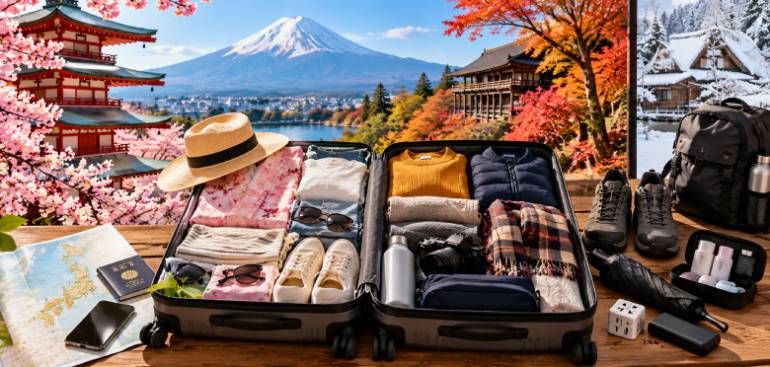
What to Pack for Japan: Essential Japan Packing List
A Japan Packing List should include comfortable clothes, walking shoes, travel documents, electronics, medicines, and seasonal essentials. Your exact packing needs depend on your travel dates and destinations.
Japan has four distinct seasons. However, temperatures can vary significantly between regions. Hokkaido can be very cold in winter. Okinawa stays much warmer during the same period.
Your itinerary also affects what you should pack.
A Tokyo and Kyoto city trip needs different items than a winter ski holiday. Similarly, a summer trip requires different clothing than a November vacation.
The good news is that you do not need to overpack.
Japan has convenience stores, pharmacies, department stores, and other places where travelers can purchase many everyday essentials.
Therefore, focus on versatile clothing and useful travel items.
What Documents Should You Pack for Japan?
Travel documents should be the first part of your Japan Packing List.
Keep your essential documents in your carry-on bag. Avoid placing them inside checked luggage.
Passport and Entry Documents
Carry your valid passport and any required travel authorization.
Entry requirements depend on your nationality and travel circumstances. Therefore, check the latest Japanese immigration requirements before departure.
Also keep digital copies of your passport and important reservations.
Store copies securely on your phone and cloud storage.
Flight and Hotel Information
Keep your flight details easily accessible.
Also save your hotel addresses and booking confirmations.
Having your accommodation details available can help when navigating Japanese cities.
Travel Insurance
Travel insurance documents should also stay in your carry-on.
Save the policy details on your phone.
A printed copy can provide a useful backup.
Money and Cards
Japan uses the Japanese yen.
International cards are widely accepted, especially in major cities. However, some smaller businesses and rural locations still require cash.
Carry some yen while traveling.
You should also bring at least two payment methods.
What Clothes Should You Pack for Japan?
The right clothing depends on the season and your itinerary.
However, layers work well for most Japan trips.
You may experience different temperatures during one journey.
For example, Tokyo can feel mild while mountain areas feel much colder.
Everyday Clothing
Pack comfortable shirts, trousers, and lightweight layers.
Choose fabrics that are easy to wash and dry.
Neutral colors can also make it easier to create different outfits.
Avoid packing too many heavy items.
You can usually wash clothes during longer trips.
Lightweight Jacket
A light jacket can be useful during spring and autumn.
It can also help inside heavily air-conditioned buildings during summer.
A compact fleece works well for cooler evenings.
Rain Protection
A small umbrella or lightweight rain jacket is useful.
Japan experiences seasonal rain, and weather can change quickly.
A waterproof outer layer is especially useful during spring and autumn.
Japan Packing List for Spring
Spring generally runs from March through May.
It is known for cherry blossoms and comfortable sightseeing weather. However, temperatures can change throughout the day.
What to Wear in Spring
Pack lightweight layers for daytime sightseeing.
Include a sweater or light jacket for mornings and evenings.
A compact rain jacket can also be useful.
Comfortable walking shoes are essential.
Spring trips often involve parks, temples, gardens, and outdoor attractions.
Therefore, expect plenty of walking.
What About Cherry Blossom Season?
Cherry blossom season can attract large crowds.
You may spend more time outdoors than expected.
Pack comfortable shoes, sunscreen, and a portable water bottle.
A small camera or phone power bank can also help.
Japan’s spring conditions vary by region. Southern areas generally warm earlier than northern areas.
Japan Packing List for Summer
Summer runs from June through August.
Japanese summers can be hot and humid, particularly in major cities.
Therefore, breathable clothing is essential.
What to Pack for Summer
Pack lightweight shirts and breathable trousers or shorts.
A hat can help during outdoor sightseeing.
Sunglasses and sunscreen are also useful.
Carry a small towel or handkerchief.
A compact umbrella can provide protection from both sun and rain.
A reusable water bottle is another useful item.
You may also want a portable fan or cooling towel.
Japan’s summer temperatures can become very high, with significant humidity.
Summer Footwear
Choose lightweight walking shoes.
Avoid shoes that become uncomfortable after several hours.
Sandals can work for some casual situations.
However, a comfortable closed shoe should remain your main option.
Japan Packing List for Fall
Fall runs from September through November.
It is one of the most comfortable seasons for sightseeing in many parts of Japan.
Temperatures generally become cooler as November approaches.
What to Pack for Fall
Pack shirts, trousers, and lightweight layers.
Add a sweater or light jacket for cooler evenings.
A compact rain jacket is also useful.
By November, you may need warmer layers in northern areas.
Autumn weather varies significantly across Japan. Therefore, check the forecast for each destination.
Fall foliage also means plenty of outdoor sightseeing.
Comfortable walking shoes remain essential.
Japan Packing List for Winter
Winter runs from December through February.
Conditions vary greatly across the country.
Tokyo and Osaka can have relatively mild winter days. Hokkaido and mountain regions can experience heavy snow.
What to Pack for Winter
Pack a warm insulated jacket.
Add thermal base layers for colder destinations.
Gloves, a scarf, and a warm hat can improve comfort.
Choose warm socks and comfortable waterproof shoes.
If you plan to ski, bring suitable specialist clothing.
You may also prefer to rent bulky ski equipment at your destination.
Winter in Tokyo and Kyoto
You may not need extreme cold-weather equipment for Tokyo and Kyoto.
A warm coat and layers can often provide enough flexibility.
However, check the forecast before departure.
Your itinerary may include colder destinations such as Hakone or mountain areas.
What to Pack for Japan in November
What to pack for Japan in November depends on your destinations, but most travelers should prepare layers, a light to medium jacket, comfortable shoes, and rain protection.
November marks late autumn in Japan.
Tokyo and Osaka can have comfortable daytime conditions. Northern and mountainous areas can feel much colder.
Therefore, your Japan Packing List for November should include flexible layers.
Pack long-sleeve shirts and a sweater.
Add a medium-weight jacket for mornings and evenings.
A scarf can provide extra warmth later in the month.
You should also pack a compact rain jacket.
Comfortable walking shoes are essential for sightseeing.
If your itinerary includes Hokkaido or high-altitude destinations, bring warmer clothing.
The official climate guidance shows that Japan’s regional temperatures vary considerably. Tokyo’s general autumn range is around 15°C to 25°C.
November can also bring beautiful autumn foliage.
Therefore, expect to spend significant time outdoors.
A camera, power bank, and comfortable day bag can make your sightseeing easier.
What Shoes Should You Pack for Japan?
Shoes deserve special attention on any Japan trip.
You may walk several miles each day.
Therefore, comfort should come before style.
Choose lightweight walking shoes with good support.
Sneakers are suitable for most city itineraries.
Consider waterproof shoes if you travel during rainy periods.
You should also choose footwear that is easy to remove.
Some temples, traditional restaurants, homes, and other locations require visitors to remove their shoes.
Slip-on shoes can make this process easier.
Pack clean socks that are comfortable for long walking days.
If you plan to hike, bring suitable hiking footwear.
However, avoid packing heavy hiking boots unless your itinerary requires them.
Electronics and Travel Accessories for Japan
Your electronics can make Japan travel much easier.
Your smartphone can help with navigation, translation, bookings, and communication.
Smartphone and Power Bank
Bring your smartphone and charging cable.
A portable power bank is also useful.
Long sightseeing days can drain your battery quickly.
You may use your phone for maps, translation, photos, train information, and tickets.
Plug Adapter
Japan uses Type A plugs and a 100V electrical system. Frequency varies between 50Hz and 60Hz by region.
Many U.S. travelers will find Type A plugs familiar.
However, check your device’s voltage requirements before plugging it in.
Some devices support dual voltage.
Others may require a suitable converter.
eSIM or Pocket Wi-Fi
Internet access can make navigation easier.
An eSIM can provide mobile data without changing your physical SIM.
Pocket Wi-Fi is another option for travelers using several devices.
Set up your preferred connection before leaving the USA.
Travel Camera
Japan offers many photography opportunities.
A smartphone camera may be enough for most travelers.
However, photography enthusiasts may prefer a dedicated camera.
Bring extra storage and batteries if needed.
Toiletries and Personal Care Items
Japan has excellent stores for toiletries.
Convenience stores and pharmacies are common in cities.
Therefore, you do not need to pack large quantities.
Bring the personal products you prefer.
Your basic toiletry bag can include:
Toothbrush and toothpaste should be included.
Pack your preferred skincare products.
Bring sunscreen for outdoor sightseeing.
Deodorant can also be useful if you prefer a specific product.
Women should pack preferred feminine hygiene products.
Travel-size toiletries help reduce luggage weight.
A small first-aid kit can also help with minor issues.
A few blister patches are particularly useful for long walking days.
Medicines and Health Essentials for Japan
Prescription medicine requires extra planning.
Japan has specific rules for bringing medicines into the country.
Some medicines require advance permission.
Others have quantity restrictions.
Japan’s Ministry of Health states that certain personal medicines can enter Japan without an Import Confirmation within specified quantity limits. However, controlled substances have additional requirements.
Therefore, never assume that a medicine legal in the USA is automatically permitted in Japan.
Check the official Japanese requirements before departure.
Keep prescription medicine in your carry-on.
Carry the original packaging when possible.
A copy of your prescription can also be helpful.
Do not pack medicine into checked luggage if you need it during the flight.
What to Pack for Japan When Traveling From the USA
Traveling from the USA requires a few additional considerations.
First, prepare your flight documents and passport.
Then check your phone compatibility and international data options.
Confirm your credit card arrangements before departure.
Also notify your bank if required.
Carry Some Japanese Yen
Cards work widely in Japan.
However, cash remains useful for smaller businesses and some rural locations.
You can also use IC cards for transportation and smaller purchases.
Popular cards include Suica and PASMO.
Many compatible IC cards work across trains, buses, convenience stores, and vending machines.
Download Useful Apps
Download your navigation and translation apps before leaving.
Google Maps can help with public transportation.
A translation app can help with menus and signs.
Also save important addresses offline.
This provides a backup when mobile service is unavailable.
Prepare for Long Walking Days
Many Japan itineraries involve extensive walking.
Tokyo, Kyoto, Osaka, and other major destinations reward travelers who explore on foot.
Therefore, footwear should be one of your top priorities.
What Not to Pack for Japan
Packing light can make your Japan trip easier.
Avoid bringing multiple pairs of heavy shoes.
You probably do not need large quantities of toiletries.
Avoid packing too many formal outfits unless your itinerary requires them.
Do not bring unnecessary bulky equipment.
Also avoid carrying restricted medicines without checking Japanese regulations.
Large luggage can become inconvenient on crowded trains and busy stations.
Japan does offer luggage delivery services between airports, hotels, and other locations.
Therefore, consider traveling with a manageable suitcase.
Therefore, consider traveling with a manageable suitcase.
How to Pack Light for a Japan Tour
A lighter suitcase can make your Japan Tour much more comfortable.
Choose clothes that work together.
Pack versatile pieces that can create multiple outfits.
Use packing cubes to organize your luggage.
Keep heavier items near the suitcase wheels.
Place frequently used items near the top.
Keep your passport, wallet, electronics, and medicines in your carry-on.
Use Japan’s Luggage Services
Japan has extensive luggage delivery services.
Major airports can arrange delivery to hotels.
Many hotels can also help send luggage to your next destination.
Coin lockers are another useful option.
They are available at many stations and tourist facilities.
This can allow you to explore without carrying a large suitcase.
Therefore, you do not always need to carry every bag throughout your trip.
Japan Packing List: Final Checklist Before You Fly
Before leaving for Japan, review your packing list one final time.
Travel Documents
Check your passport and entry requirements.
Save your flight and hotel confirmations.
Keep your travel insurance details accessible.
Save emergency contact information.
Clothing
Check the weather for every destination.
Pack layers appropriate for the season.
Bring comfortable walking shoes.
Add rain protection when needed.
Electronics
Pack your phone and charger.
Bring a power bank.
Check your plug and voltage requirements.
Arrange your eSIM or mobile data.
Money
Carry Japanese yen.
Bring at least two payment methods.
Consider setting up an IC travel card.
Health
Pack essential prescription medicines.
Check Japanese medicine restrictions.
Carry basic personal health items.
Day Bag
Use a small backpack or crossbody bag.
Keep your phone, wallet, water bottle, camera, and portable charger inside.
A reusable shopping bag can also be useful.
Plan Your Japan Tour From the USA
The right Japan Packing List depends on your travel dates, destinations, and activities.
A well-planned tour can make those decisions easier.
Global Holidays USA offers several Japan travel packages for travelers from the USA.
For travelers interested in combining Japan and South Korea, the Japan & South Korea Tour provides a multi-country itinerary.
Travelers looking for a scenic Japanese experience can also explore the Japan Alpine Route Tour.
For a broader Japan experience, the Japan Tour offers an organized itinerary covering major destinations.
Choose your travel dates first.
Then build your packing list around the weather and activities.
This approach helps you avoid overpacking while staying prepared.
Conclusion
The best Japan Packing List includes comfortable clothing, walking shoes, travel documents, electronics, medicines, and seasonal essentials. Your final packing choices should depend on your travel month and destinations.
For spring, focus on layers and light jackets.
For summer, pack breathable clothing and sun protection.
For fall, use layers and prepare for cooler evenings.
For winter, pack warm clothing and adjust your gear for the region.
If you are asking what to pack for Japan in November, choose layers, a sweater, a jacket, comfortable shoes, and rain protection. Add warmer clothing for northern areas.
Travelers from the USA should also check medicine rules, voltage requirements, payment options, and mobile connectivity before departure.
Most importantly, avoid overpacking.
A comfortable suitcase, versatile clothing, and reliable walking shoes can make your Japan Travel experience much easier.
Also Read: Japan Travel Itinerary: 7, 10 & 14-Day Plans for First-Time Visitors
Frequently Asked Questions
What should I pack for Japan?
Pack comfortable clothes, walking shoes, travel documents, electronics, medicines, toiletries, payment cards, and seasonal layers. Your exact list depends on your travel dates.
What should I pack for Japan in November?
Pack long-sleeve clothing, layers, a sweater, a light to medium jacket, comfortable shoes, and rain protection. Add warmer clothing for northern or mountainous areas.
Do I need a jacket for Japan?
A jacket is useful during spring and autumn. You will also need warmer outerwear during winter.
Summer travelers may only need a lightweight layer.
How many pairs of shoes should I bring to Japan?
Most travelers can manage with one comfortable pair of walking shoes.
Add a second pair only if your itinerary requires different footwear.
Do I need an electrical adapter for Japan from the USA?
Japan uses Type A plugs and 100V electricity. Many U.S. devices use compatible plugs, but you should check each device’s voltage requirements.
Should I bring cash to Japan?
Yes. Cards are widely accepted, but cash remains useful at smaller businesses and rural locations.
Should I bring a power bank to Japan?
Yes. A power bank is useful for long sightseeing days.
You may use your phone for maps, translation, tickets, and photos.
Can I bring prescription medicine to Japan?
Some medicines can be brought for personal use within specified limits. However, certain controlled medicines require advance permission or may be prohibited. Check official Japanese rules before traveling.
Should I pack a large suitcase for Japan?
A smaller suitcase is usually easier for city travel.
Japan also offers luggage delivery and storage services.
 Axar Tours Global Holidays LLC.